A Neighbor's Truck, a Clean Title: Lending on Private-Party Vehicles and Equipment
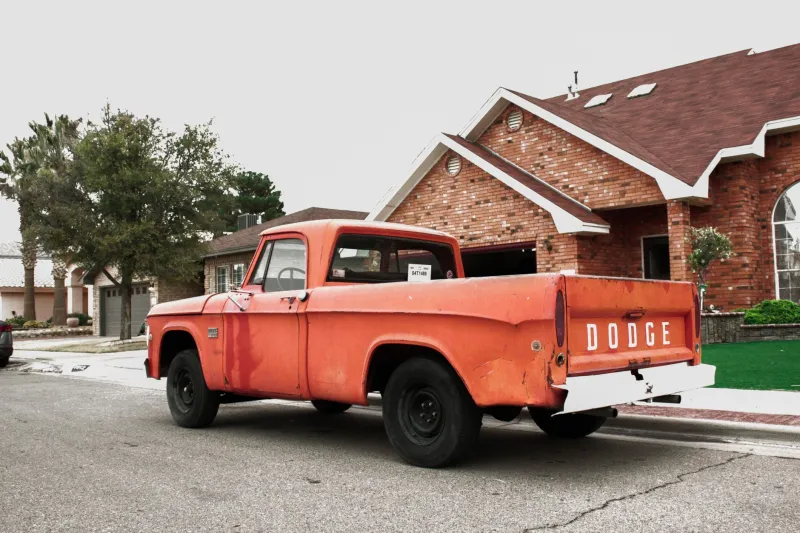
In Hico and the counties around it, a good used truck rarely announces itself with a windshield banner. It sits in a neighbor's driveway with a hand-lettered sign, or it gets mentioned after church, or a cousin knows a fellow in Iredell who is selling a trailer. Private-party sales are how a great deal of rural Texas equipment changes hands, and there is nothing wrong with that. A community bank can finance these purchases. The work simply falls in a different order than it does at a dealership, and the paper trail has to be built deliberately.
Why a Private Sale Is Not a Dealer Sale
When you buy from a dealer, the dealership handles the title work, collects the sales tax, submits the registration, and usually has a finance office that knows exactly which forms the state wants. When you buy from a neighbor, that entire back office becomes you. There is no reconditioning report, no limited warranty, and no dealer recourse if something goes wrong a month later. That is not a reason to walk away. It is a reason to slow down and treat the transaction like the small legal event it is.
From the bank's side, a private-party loan is underwritten a little differently. The vehicle is the collateral, so its value and its title history carry more weight than they would on a dealer contract. Expect the lender to look at mileage, age, condition, and the guidebook value, and for equipment, at hours, serial numbers, and service records. Expect, too, a conversation about down payment. Private-party loans often run at a lower advance rate than dealer paper because there is no dealer to stand behind the sale.
Begin With the Seller and the Title
Before anyone discusses terms, confirm that the person selling the truck is the person named on the title. Ask to see the title in person, and look at it closely. Is it an original or a duplicate? Is there a lienholder printed on the face? Does the seller's name match the identification they present? A title that has been signed over but never transferred, sometimes called an open title, is a warning sign rather than a convenience.
If a lien is still on the vehicle, the seller does not hold clean title, and the bank cannot perfect its own lien until that one is released. In that situation, the usual arrangement is to pay the existing lender directly and route the balance to the seller. Ask for a written payoff quote with a good-through date, and get the lien release in hand before the title is reassigned.
Run a title history check and compare the vehicle identification number on the title with the VIN plate on the dashboard and the sticker on the driver's door jamb. For a trailer, verify the gross vehicle weight rating, because Texas titles trailers above a certain weight threshold and treats lighter ones differently. For a tractor or a piece of shop equipment, write down the make, model, year, serial number, and hour meter reading, and photograph the plate.
What the Bank Will Ask For
A private-party loan application generally includes the purchase agreement or bill of sale, the title, proof of insurance, proof of income, and identification. The bank may order a value from a recognized guide, request photographs, or, for equipment, send an appraiser. If the truck is old enough or modified enough to fall outside standard lending guidelines, the bank may still make the loan, but it will be structured around the actual collateral rather than a book number.
An independent inspection is money well spent. A mechanic who has no relationship with the seller can tell you about frame damage, a slipping transmission, or tires that will not survive the summer. On a trailer, look at the brakes, the tires, the lights, and the welds. On equipment, ask for maintenance logs and check for hour meter rollback.
The Paper Trail, Item by Item
A clean private-party file usually contains the following:
- A bill of sale. Full legal names and addresses of both parties, the VIN or serial number, the date, the purchase price, the odometer reading where applicable, and both signatures. State plainly that the vehicle is sold as is.
- A properly assigned title. The seller signs in the assignment section exactly as their name appears on the face of the title. Some transfers require notarization; follow the instructions printed on the document. The buyer's name goes in as purchaser, and the lienholder information is completed for the bank.
- The state title and registration application. In Texas this is Form 130-U, which carries the buyer's information, the seller's information, the sales tax calculation, and the lienholder details.
- An odometer disclosure. Required for vehicles within the federal age window; the form is often part of the title assignment or the 130-U.
- Proof of insurance. Texas requires liability coverage to register a vehicle, and a lender will require physical damage coverage with the bank named as loss payee until the loan is satisfied.
- The tax payment. Texas motor vehicle sales tax on a private sale is generally based on the greater of the purchase price or the state's standard presumptive value, unless a certified appraisal supports a lower figure. The county tax office can confirm the calculation for your transaction.
The buyer typically has thirty days to transfer the title and register the vehicle before penalties begin to accrue. That window closes faster than most people expect.
Where the Bank Sits in the Room
A community bank can host the closing, and there is real value in doing so. The seller brings the title and identification. The buyer brings the down payment and insurance card. The bank verifies the documents, prepares the lien filing, and disburses funds only after the title is properly assigned. If a prior lender needs to be paid off, the bank can send that portion directly and hand the seller a check for the remainder. Two checks and a signed settlement statement beat a folder of cash and a promise.
For equipment that is not titled, the bank perfects its interest through a UCC-1 financing statement filed with the state. For titled equipment, the lien is recorded on the title itself. Either way, the goal is the same: a recorded, dated, verifiable claim on the collateral.
The Cost of Skipping a Step
Most private-party problems are paperwork problems, and they surface at the worst possible moment. A title that cannot be transferred means a truck that cannot be registered. A lien that was never released means a bank that cannot perfect its own. A lapsed insurance policy means the borrower carries the full loss alone. None of these outcomes requires a dishonest seller. They simply require a busy person and an unfinished form.
The handshake is not the problem. In a small town, it is often the reason the deal happens at all. The paper trail is what allows the handshake to hold up years later, when the truck is traded, the loan is paid, or the title is pulled out of a file drawer and someone needs to know exactly who owned what, and when.
If you have found the right truck in a neighbor's driveway, bring the details to the bank before the money changes hands. That conversation is usually shorter than the one about the transmission, and it is the one that keeps the deal clean.