The Case for a Banker Who Remembers Your Grandkids' Names
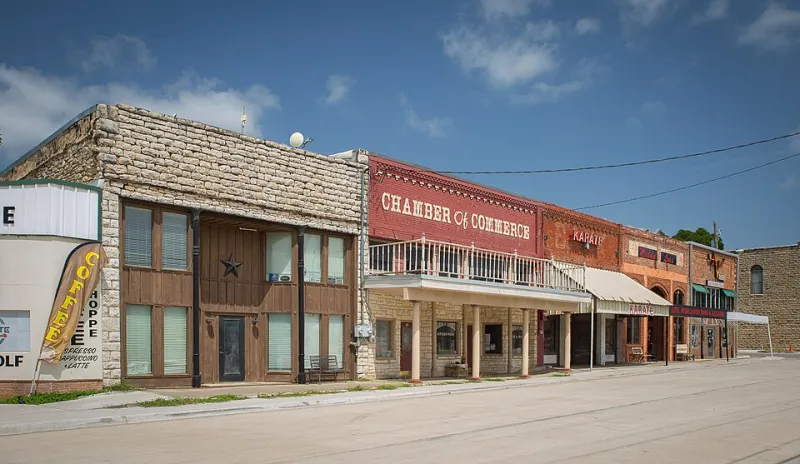
Photo: Renelibrary, CC BY-SA 4.0, via Wikimedia Commons
There's a particular kind of frustration that comes with calling a national bank's toll-free number: the hold music, the case number, the representative reading from a script in a call center three time zones away. If you've experienced it, you already understand something important about modern banking. Scale has its advantages, but it comes at a cost — and that cost is usually paid by the customer.
At First National Bank of Hico, we'd like to make the case that the alternative isn't nostalgia. It's practical, and it works.
Decisions Made by People, Not Formulas
Consider how a loan application actually gets evaluated. At a large institution, your file is fed through an automated underwriting system that sees one thing: numbers. A credit score, a debt-to-income ratio, a length of credit history. If your situation doesn't fit the model — a rancher with seasonal income, a young couple borrowing against a small business, a retiree with substantial assets but modest reported income — the system simply says no.
A community lender can say something different: let's talk.
We've approved loans for customers whose stories wouldn't fit inside a spreadsheet cell. The widow who needed to repair her roof after a hailstorm but hadn't borrowed in thirty years. The welder starting his own shop with a contract in hand and a solid reputation on the east side of the county. In each case, the deciding factor wasn't an algorithm. It was a conversation with someone who knew the applicant, their family, and their standing in the community.
Speed You Can Actually Feel
There's a practical benefit that follows from local decision-making: it's fast. When the people who review your application sit down the hall from the people who fund it, approvals that take weeks elsewhere can take days here. No overnight packages to a regional processing center. No waiting on a committee that has never seen the property, much less the town.
When you're trying to close on a home before the seller accepts another offer, or seize a piece of equipment before it's gone, that speed isn't a luxury. It can be the difference between getting the deal and losing it.
Your Money Doesn't Leave the County
Here's a question worth asking: when you deposit a paycheck at a mega-bank, where does that money go? In most cases, it's aggregated with billions of other dollars and deployed wherever the institution's portfolio managers see fit — often far from Texas, sometimes far from any Main Street at all.
Community banking works differently. Deposits made in Hamilton County have a way of staying in Hamilton County. They become the small business loan for the diner on Cypress Street, the farm and ranch note, the mortgage for a young family buying their first house in town. Local deposits fund local lending. That circulation is a large part of what keeps a small town's economy resilient.
An App Can't Look You in the Eye
None of this is to say technology has no place. We offer online banking, mobile deposits, and the digital conveniences our customers reasonably expect. The difference is what sits behind the screen. A fintech app is a product. A hometown bank is a relationship — one where the teller asks about your daughter's wedding, the loan officer remembers the year you bought your place, and the president of the bank will take your call.
When something goes wrong — a fraudulent charge, a lost card, a question about a statement — you don't navigate a phone tree. You walk in and talk to someone accountable, by name, face to face.
The Bottom Line
Banking is ultimately an act of trust. Trust is built through familiarity, accountability, and time — three things no application can manufacture. For more than a century, that has been the way neighbors here have done it, and it remains the way we do business today.
If you're tired of being a number, come see us in Hico. We'd like to know your name — and we'll remember it.