Two Loans, Two Ledgers: How the Purpose of Your Borrowing Shapes Your Terms
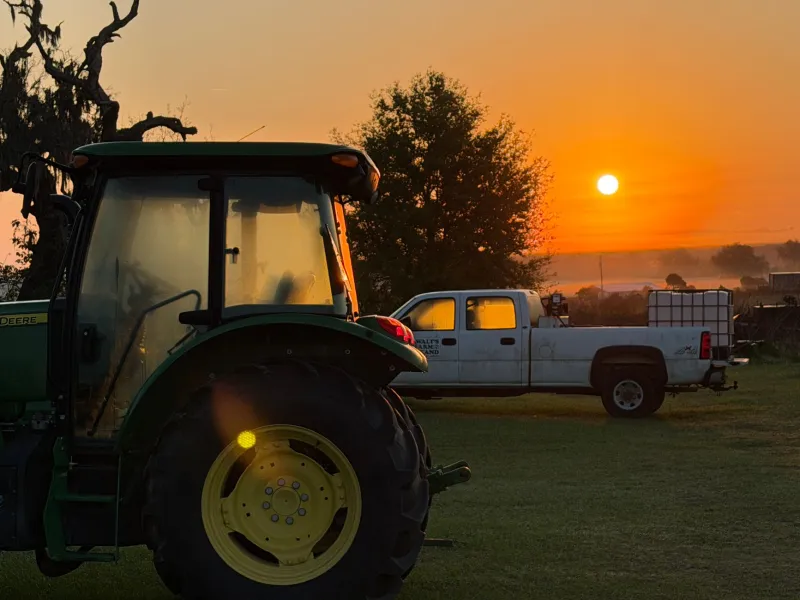
Ask a neighbor what a used tractor and a used three-quarter-ton pickup have in common, and the honest answer is: a similar price tag. Ask a lender, and you will get a very different answer. At a community bank, the purpose behind a loan is never just paperwork — it determines how the loan is structured, what the collateral is worth on paper, and what rate the borrower can reasonably expect.
Understanding that difference puts you in a stronger position the next time you sit down at a loan officer's desk, whether the purchase has four wheels or four wheel hubs.
Collateral Is Not Just What You Bought — It's What It Will Be Worth
Every secured loan rests on a simple premise: if the borrower cannot repay, the lender needs something of value to fall back on. But not all collateral ages the same way, and that is where the tractor and the truck part company.
A personal vehicle begins losing value the day it leaves the lot, and the decline is steep in the first two years. Lenders account for this with a depreciation schedule — an estimate of what the truck will be worth at each point in the loan's life. Because the truck's value drops quickly, lenders are more conservative about how much they will advance against it.
Farm equipment behaves differently. A well-maintained tractor holds its value remarkably well, particularly in a region where there is steady demand from operations large and small. A thirty-year-old utility tractor with low hours can still command serious money at auction. That slower depreciation gives the lender more comfort, which can translate into more favorable terms for the borrower.
Loan-to-Value: The Number Behind the Decision
The key metric in any secured loan is the loan-to-value ratio, or LTV. It is simply the amount borrowed divided by the value of the collateral.
Suppose you are buying a used truck for $40,000. A lender might be willing to finance 90 to 100 percent of the purchase price, but often with a shorter term or a rate that reflects the faster decline in the vehicle's worth. On a $40,000 tractor, the same lender might finance a similar percentage — but with a longer repayment period and terms that better reflect the equipment's staying power, especially when the equipment itself generates income for the operation that will repay the loan.
Here is the practical takeaway: a larger down payment lowers the LTV, and a lower LTV almost always improves your terms. Putting 20 percent down on either purchase signals commitment and gives the lender a cushion against depreciation in the early years of the loan.
Why the Same Borrower Can See Different Offers
It is not unusual for a customer with excellent credit to receive noticeably different terms on two loans of the same dollar amount. This is not favoritism — it is arithmetic.
Lenders weigh several factors alongside credit history:
- Useful life. Equipment built for heavy work is engineered for decades of service; consumer vehicles are not.
- Income connection. A tractor is often a productive asset — it supports hay cutting, land clearing, or livestock work that generates revenue. Lenders view productive collateral more favorably.
- Market liquidity. In Central Texas, used farm equipment and work trucks both sell, but auction values and buyer demand differ, and those differences show up in the rate.
- Insurance and titling. Vehicles carry straightforward titling and insurance requirements; equipment financing sometimes offers flexibility on both.
None of this means one loan is universally better. It means the right product depends on the purchase.
Matching the Loan to the Job
The most common mistake we see is borrowing for a business purchase through a product designed for personal spending — or the reverse. A farmer who finances a tractor on a generic personal loan may lose the longer terms and structure that equipment financing offers. A homeowner who rolls a personal truck into a farm equipment loan may create problems at tax time or at trade-in.
Before you borrow, ask yourself three questions:
- Will this purchase earn income, or serve personal use?
- How long will it hold value relative to how long I need to repay it?
- Do I have the down payment to bring the loan-to-value ratio into a comfortable range?
Bring those answers to the conversation. A loan officer who knows the local market — what used equipment actually sells for at the Hamilton auction, what a work truck is worth after five Central Texas summers — can structure terms that out-of-state online lenders simply cannot match.
The Value of Sitting Down in Person
Algorithms price loans by credit score and loan amount. Neighbors price loans by the whole picture: the operation, the land, the history, the plan. When the collateral is a tractor that will still be running when the note is paid off, or a truck that will haul the family for a decade, the details matter — and details are best discussed face to face.
Whether your next major purchase rolls on tires or tracks, stop by and talk it through. The right loan for the right purpose is one of the simplest ways to keep more of what you earn.